Traffic From AI Search: What It Is and How to Grow It
· Last updated

Traffic From AI Search: What It Is and How to Grow It
Traffic from AI search is the visits that arrive when someone clicks a link inside an answer written by ChatGPT, Gemini, Perplexity, Claude or Google’s AI features. It is a small channel that is growing, it converts better than most organic traffic, and it is only earned when an AI engine cites your pages. Winning it means fixing why engines skip you, then measuring honestly, because analytics undercount it. Our done-for-you service at AIO Automatic handles that work for you and reports on it every week.
TL;DR
- AI search traffic comes from clicks on citations inside a single synthesized answer, not from a list of blue links.
- Google’s AI features can cut clicks: in one U.S. experiment, AI Mode lowered click-through by 18.8 percentage points. Being cited is how you stay in the answer.
- AI-referred visitors tend to be worth more: one agency dataset found they were 1.5 times as likely to complete key events as organic visitors.
- Referral reports undercount AI influence, so treat the number as a floor and track citations separately.
- Citation rates respond to diagnosing why a page is not cited, not to generic rewrites or keyword stuffing.
Table of Contents
- What counts as traffic from AI search
- How big is it, and is it replacing organic traffic?
- What AI answers do to clicks
- Why AI-referred visitors are worth more
- How to measure AI search traffic in GA4
- Separate visibility from business outcomes
- What actually earns AI citations
- A simple 90-day plan
- Our perspective
- How we help
- FAQ
- Sources
What counts as traffic from AI search
AI referral traffic is made of website visits that start with a click from a response generated by an answer engine. The referring source is the engine itself, such as ChatGPT or Perplexity, rather than a search results page (HubSpot).
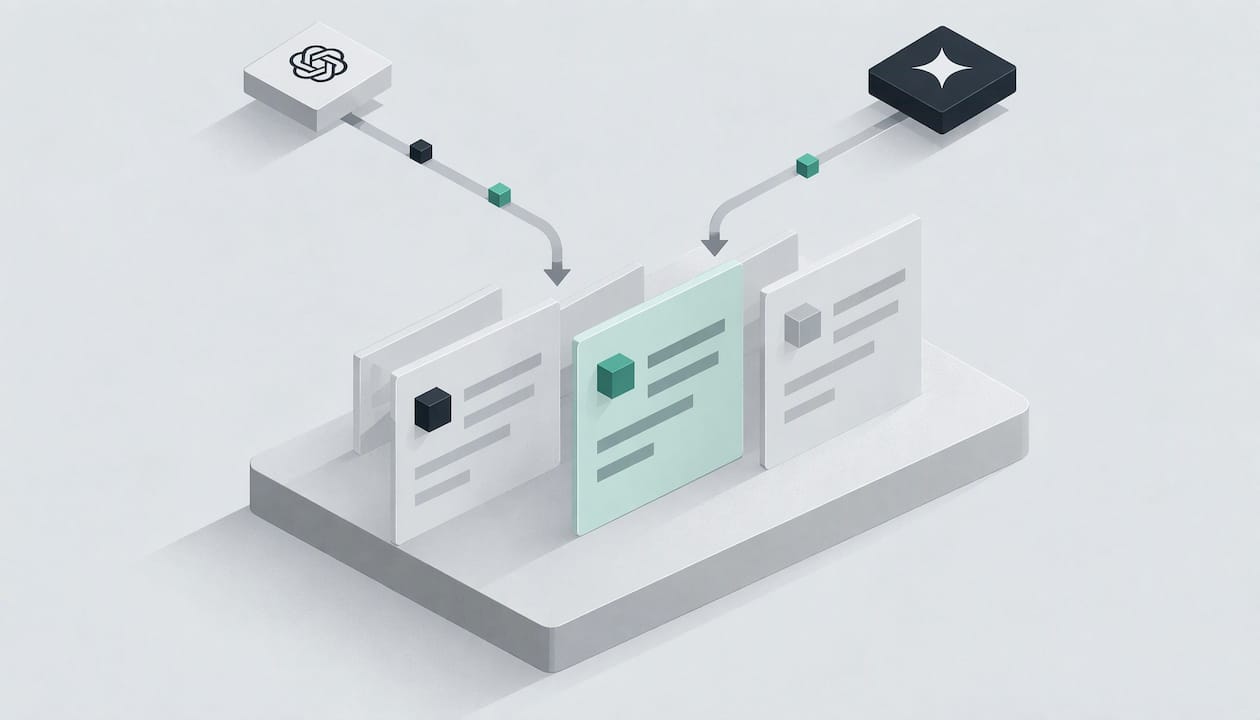
The difference from organic search is the path. In classic search, a person sees ten options and picks one, often while comparing several tabs. In an AI answer, the engine has already resolved much of the question and named a few sources it treats as credible. The visitor who clicks has been pre-filtered, and that is a large part of why this traffic behaves differently.
Two things get mixed up constantly:
- Citation or mention: your brand or page appears in the answer. No visit is guaranteed.
- Referral visit: someone clicks through and lands on your site. Your analytics can see this.
A citation that sends no click still shapes what a buyer believes, but your analytics cannot count it. Matomo makes this point directly: AI answers can use or summarize content without producing a human visit. So a sound plan tracks visibility and visits as two separate numbers. We cover the visibility side in our guide to brand visibility in AI.
How big is it, and is it replacing organic traffic?
It is still small next to organic search, but it is moving fast, and the organic side is under pressure.
Brainlabs data, reported by eMarketer on August 25, 2026, covered 54 clients. Organic sessions fell by an average of more than 10% after the broader Google AI Overviews rollout in September 2025. Referrals from AI platforms grew 163% over the measured period. Growth of that size starts from a low base, so read it as direction, not as a replacement for organic volume.
The wider picture varies by country and site type. Similarweb’s analysis of 10,000 domains in each of two countries, reported by Search Engine Journal, found organic-search visits fell 13.2% in the U.S. and 24.4% in France between August 2024 and August 2026. A single universal percentage does not exist, so compare your own numbers, not an industry headline.
For a fuller set of usage and click figures, see our sourced AI search statistics.
What AI answers do to clicks
When an AI answer satisfies the question, fewer people click anything. A preregistered field experiment with 1,100 U.S. participants found that assignment to Google’s AI Mode reduced click-through by 18.8 percentage points compared with normal Google search. The share of participants clicking news sites fell by 12.5 points and Wikipedia by 9.9 points.

The authors are clear about the limits. The result is causal for the tested Google Search setup and U.S. participants. Other platforms, query types and populations may behave differently.
What this means for a business:
- Simple informational queries are the most exposed. A quick definition is easy for an AI to answer without a click.
- Queries where someone is comparing, deciding or buying keep more reasons to click through to a source.
- Being absent from the answer is worse than being cited. If the engine names three sources and you are not among them, the visit goes to someone else.
If you want to understand how the Google side works, our explainer on Google AI Mode defines it with examples.
Why AI-referred visitors are worth more
The same Brainlabs dataset found AI-driven key events rose 335%. Visitors from ChatGPT, Gemini, Perplexity and Copilot were 1.5 times as likely to complete key events as organic visitors (eMarketer). A peer-reviewed paper in Management & Marketing (2026) cites session analytics in which ChatGPT-originating sessions converted at roughly nine times the rate of Google organic, attributing that figure to earlier work by Bell (2025).
The two figures differ a lot, which is itself useful: the direction is consistent, the size depends on the site, the offer and what you count as a conversion. Do not plan revenue around a multiplier from someone else’s data. Measure your own.
The likely reason is the pre-qualification described earlier. The engine explained the options, named you as a credible source, and the visitor clicked to act on it. That is a very different starting point from someone skimming a results page.
How to measure AI search traffic in GA4
GA4 is Google’s analytics platform, and it will not label most AI visits for you out of the box. A workable setup takes about twenty minutes.
Build an AI channel
- In GA4 admin, open Channel groups and copy the default channel group.
- Add a new channel called “AI Search” and set a rule where the session source matches a regular expression (a text pattern) listing the engines: chatgpt.com, chat.openai.com, perplexity, gemini.google.com, copilot.microsoft.com, claude.ai and deepseek.com.
- Place this channel above Referral in the order, so these sessions are not swallowed by the generic channel.
- Open Reports, then Acquisition, then Traffic acquisition, and switch to your new channel group to see sessions, engagement and key events.
Re-check the list every quarter. Engines change their domains, and new ones appear.
Know what you will miss
The numbers you see are a floor. Three reasons:
- Referrer data is dropped. Some AI products pass referral data properly and others do not. Visits can land in Direct instead, which hides them.
- People type the brand name. Someone who gets a recommendation in a chat and then types your name into the browser appears as direct or organic traffic.
- Google’s AI features are bundled. Traffic from AI Overviews arrives inside ordinary Google organic and cannot be cleanly separated.
A practical workaround is to watch the AI channel together with direct sessions that show high engagement, and to add a “how did you hear about us” field to forms. Self-reported answers catch what the analytics miss.
Compare the visitors, not only the volume
Once the channel exists, compare AI-referred sessions with organic ones on engagement time, pages per session and conversion rate. A guide to analytics setup with GA4 and GTM shows how to structure link and behavior tracking so those comparisons are trustworthy. Remember that volumes are small at first, so a handful of sessions will swing your rates wildly. Wait for a meaningful sample before judging.
Separate visibility from business outcomes
A common mistake is reporting AI visibility as if it were revenue. They are linked but not the same thing. The honest chain is:
- Citations and mentions across engines (visibility).
- Referral visits (what analytics can see).
- Leads, sales or other key events (outcomes).
Each step loses people, and the first step is invisible to analytics. If you only watch step two, you will underrate a campaign that is building recognition. If you only watch step one, you can claim success while nothing reaches your pipeline. Benchmark your outcome stage against realistic figures too; this guide to conversion rate benchmarks helps you judge whether a conversion rate is strong for your kind of business. Our post on AI brand mention tracking explains what to count at the first step.
What actually earns AI citations
Traffic only follows citations, so the real lever is why engines choose some pages and skip others.
Two pieces of academic work are worth knowing:
- A March 2026 paper on generative engine optimization reported that its AgentGEO method improved citation rates by more than 40% while modifying 5% of content, versus 25% for baseline methods. Those are benchmark results from that paper. Its authors argue that diagnosing why a specific page is not cited can beat generic rewrites, which may even harm some long-tail content.
- The Management & Marketing analysis, drawing on an earlier benchmark of 10,000 queries, explains that AI visibility follows a different logic than ranking in search results. Keyword density has minimal influence on citation probability, while statistics, source citations and expert quotations can improve visibility by up to 40%.
In plain terms: stop writing for keyword counts. Write pages that state a clear answer, back it with sourced numbers, and make it easy for a machine to read and attribute. Then check page by page why a given engine is not citing you.
That means technical groundwork (robots.txt rules that let AI crawlers in, an llms.txt file, schema markup), answer-ready content, and a reputation signal across the web. Our roundups on what drives AI visibility, how to optimize content for AI search and how ChatGPT citations work go through each in detail. For Google specifically, see how to rank in AI Overviews, AI Mode and Gemini.
A simple 90-day plan
Days 1 to 15: baseline. Build the GA4 channel. List 20 to 30 questions your buyers ask. Record, for each, which engines cite you and which cite your competitors.
Days 16 to 45: fix the foundation. Confirm AI crawlers can reach your key pages. Add schema markup and clear author and date information. Rewrite your top commercial pages so the first lines answer the question directly, with a sourced figure.
Days 46 to 90: publish and compare. Publish answer-ready pages for the questions where you are absent. Re-run your question list every week and log changes in citations. Compare AI-referred sessions against organic on engagement and conversions.

The weekly rhythm matters because AI answers change often. A single snapshot tells you very little; a trend against competitors tells you whether the work is landing.
Our perspective
Most teams we talk to think of AI search as a reporting problem: install a dashboard, watch the mentions, hope they rise. We think that is the wrong end of the job.
A dashboard tells you that an engine ignored you. It does not make the engine read your pages, trust them or cite them. That takes technical fixes, content written to be quoted, and steady indexing work across many engines at once.
That is why our service is done for you by experts, not left to client dashboards. Our AI Spider is built to index and analyze your content across 12+ AI search engines, and our weekly reports compare your performance against competitors so you can see whether the work is moving citations, and from there, visits.
The traffic is the result. The citation is the work. Treat them in that order.
Chad
How we help
AIO Automatic is a done-for-you AI search visibility service. It includes a GEO/AEO audit, technical fixes (llms.txt, robots.txt, schema markup), AI Spider indexing across 12+ engines including ChatGPT, Perplexity, Gemini, Claude and Google AI, answer-ready content, YouTube channel and video optimization, multi-engine AI keyword research, and weekly performance tracking against competitors.
Plans are billed annually at $1,500 per month or month-to-month at $2,000 per month. See the details on our services page.

If Google’s AI features are your main concern, our Google AI Overviews and AI Mode optimization service page explains that part of the work.
FAQ
Is traffic from AI search worth pursuing if the volume is small?
Yes, because it is growing and the visitors tend to be more valuable. One agency dataset showed AI platform referrals up 163% and AI-visitors 1.5 times as likely to complete key events as organic visitors. Being cited also protects you as clicks on ordinary results fall.
Why does my AI traffic look lower than expected in GA4?
Some AI products do not pass referral data, so visits land in Direct. People also type a brand name after seeing it recommended, and Google AI Overviews traffic sits inside organic. Treat the visible figure as a floor and watch high-engagement direct sessions beside it.
Do AI Overviews and AI Mode reduce my clicks?
They can. In a U.S. field experiment, AI Mode cut click-through by 18.8 percentage points against normal Google search. Results differ by platform, query and audience, and the effect is largest on simple informational queries.
How is AI referral traffic different from organic traffic?
Organic visitors click a link from a list of results, often while comparing several sources. AI-referred visitors click a citation inside one synthesized answer that has already framed your page as credible. That is why their behavior and conversion often differ.
Sources
- AI Referral Traffic definition (HubSpot)
- AI agents and AI traffic: how the web is changing (Matomo)
- AI search referrals deliver higher-value visits (eMarketer)
- The Traffic Pool Is Shrinking (Search Engine Journal)
- AI in Search Reduces Publisher Referrals (arXiv)
- Geo Readiness Audit as a Brand Imperative (Management & Marketing)
- Diagnosing and Repairing Citation Failures in Generative Engine Optimization (arXiv)
- Affiliate link analytics setup: GA4, GTM and link health
- Conversion rate benchmarks guide